Intro
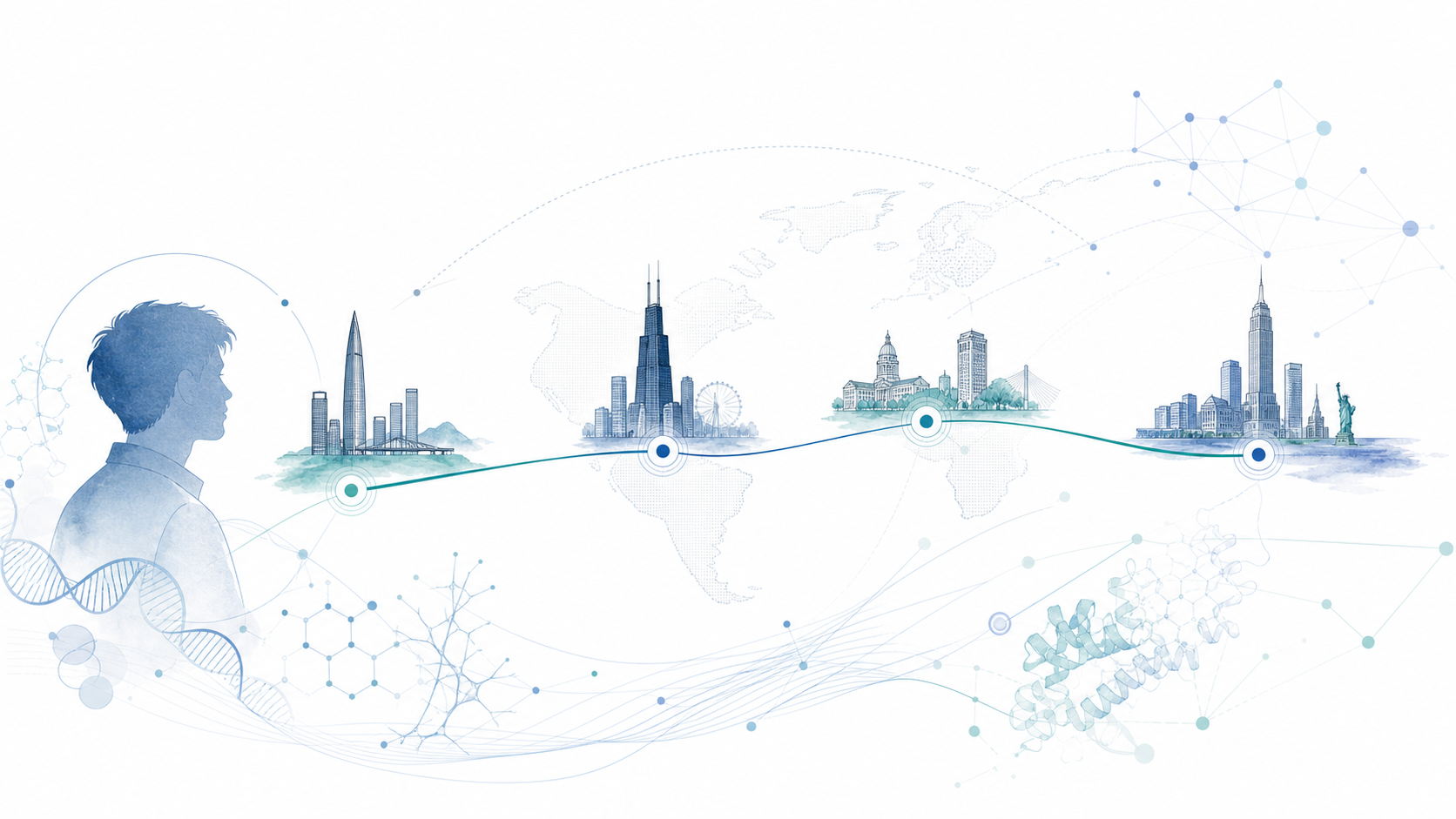
I am an incoming Neurobiology and Behavior PhD student at Columbia University. I received my bachelor's degree in Applied Psychology at the Chinese University of Hong Kong, Shenzhen in 2023 (PI: Dr. Shi Yu) and my master's degree in Computational Social Science at the University of Chicago in 2025 (PI: Dr. Akram Bakkour). After graduation, I worked as a full-time research assistant at John Torous' lab in the Department of Psychiatry at Beth Israel Deaconess Medical Center (Harvard Medical School).
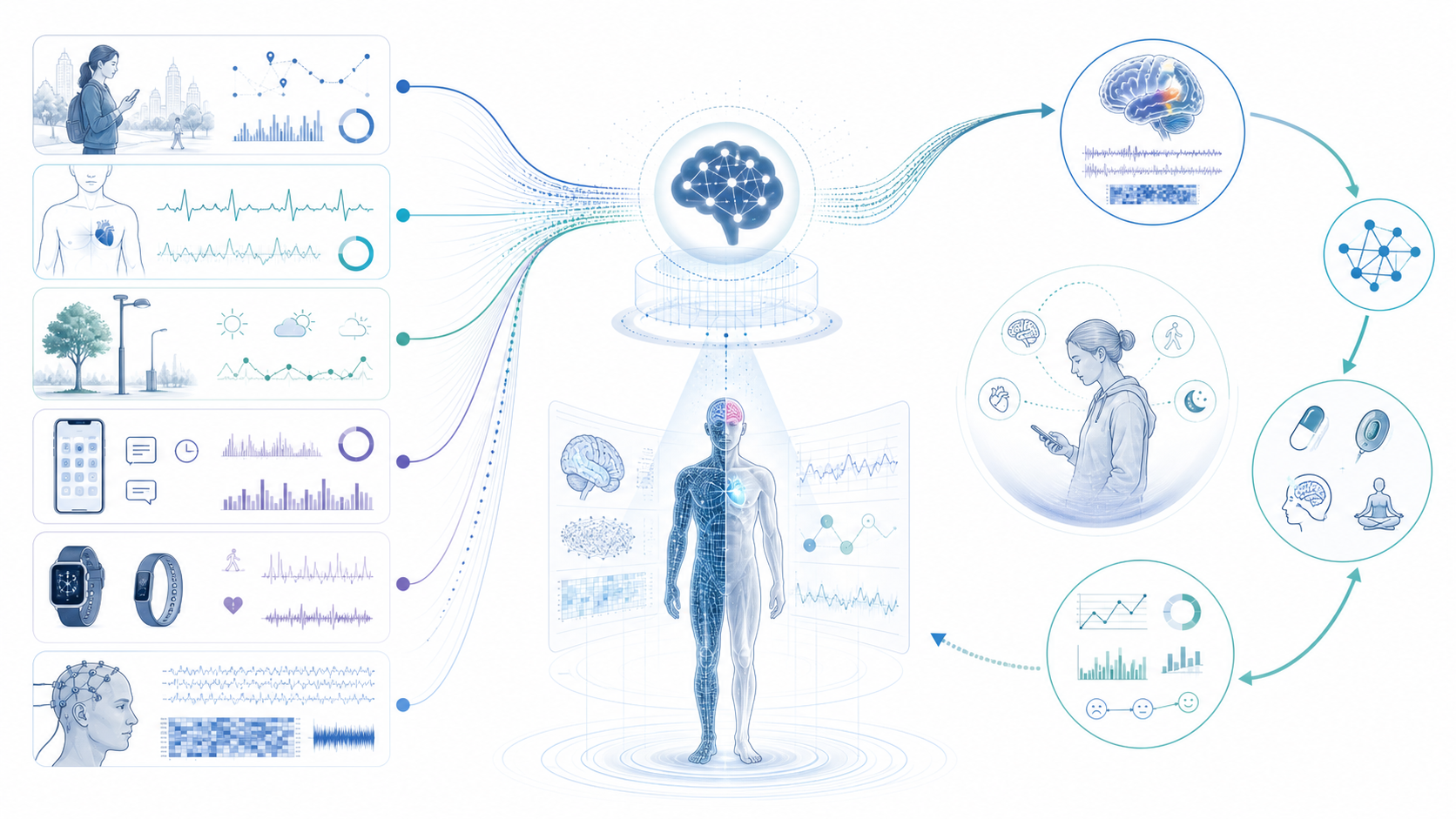
My research focuses on understanding and treating psychiatric and neurological disorders as they actually unfold: continuously, in real-world contexts, at the intersection of behavior, physiology, and neural signals. Clinical practice currently relies on episodic interviews and checklists, reducing complex, dynamic conditions to static snapshots that miss what actually drives symptom expression and recovery. I address this through four lines of work: 1) replacing episodic snapshots with continuous digital phenotyping of daily behavior and physiology; 2) moving from self-reported symptoms to direct neural decoding and brain-computer interfaces; 3) shifting from fixed treatments to neurostimulation that adapts in real time; and 4)integrating these into a unified system that monitors the brain and behavior continuously.
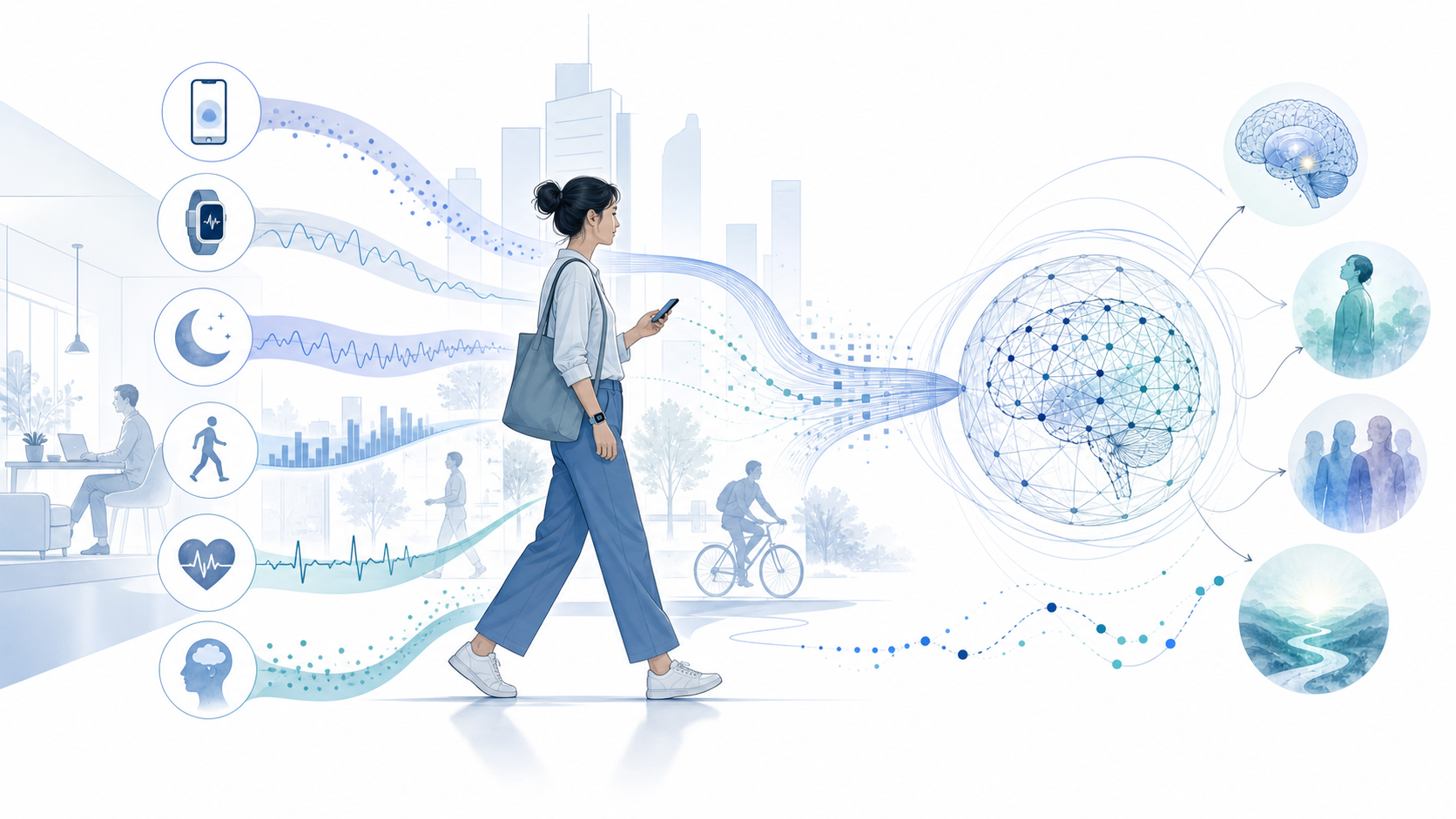
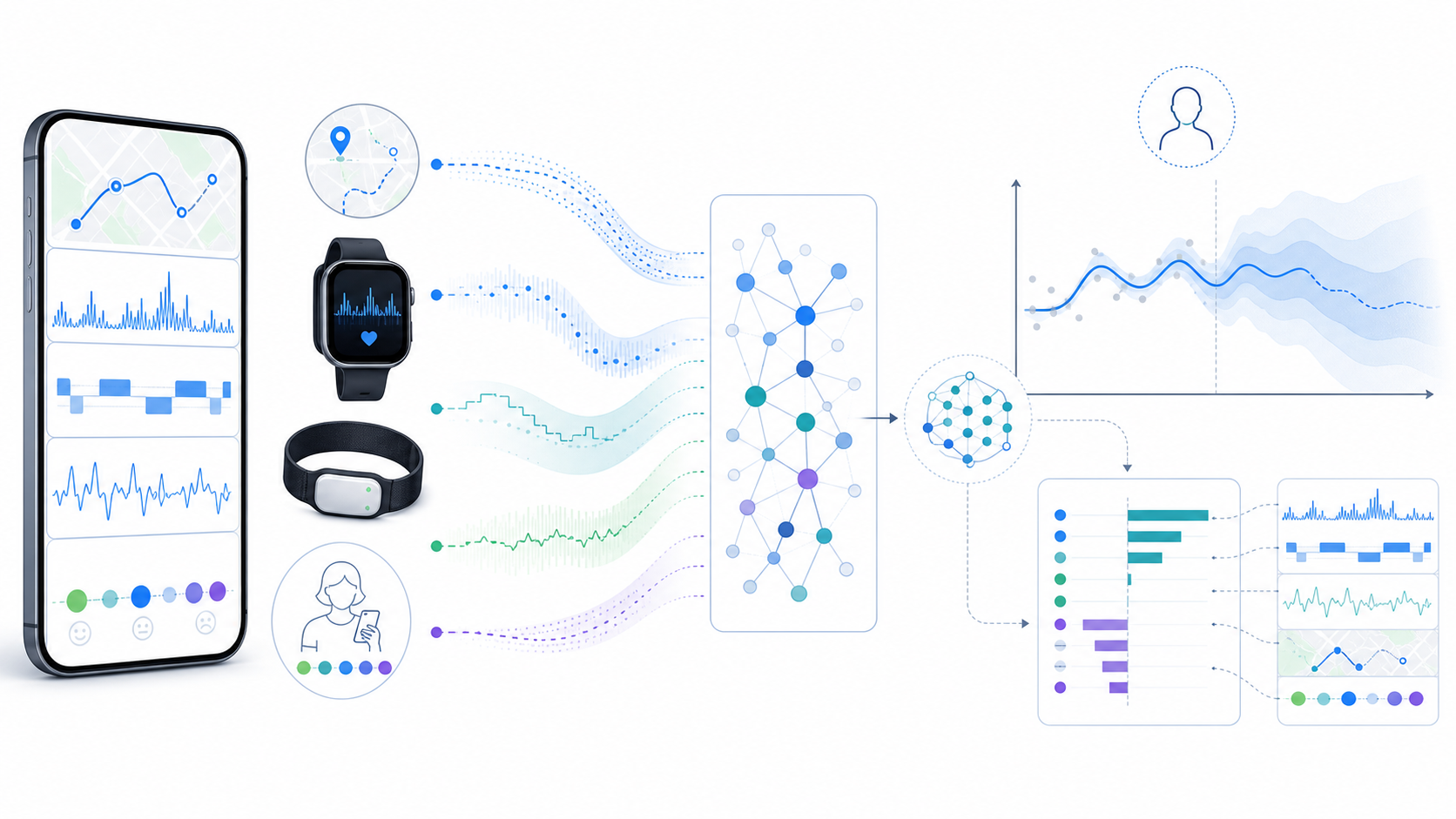
First, I develop multimodal digital phenotyping methods using smartphones and wearable sensors to capture the continuous dynamics of affect, behavior, and physiology in daily life. I apply network and dynamical systems theories to model causal interactions among symptoms and identify early warning signs of critical transitions. I also develop small-data ML algorithms with multimodal fusion, uncertainty quantification, and interpretable feature attribution, for individualized forecasting and just-in-time adaptive interventions from sparse, irregular data streams.
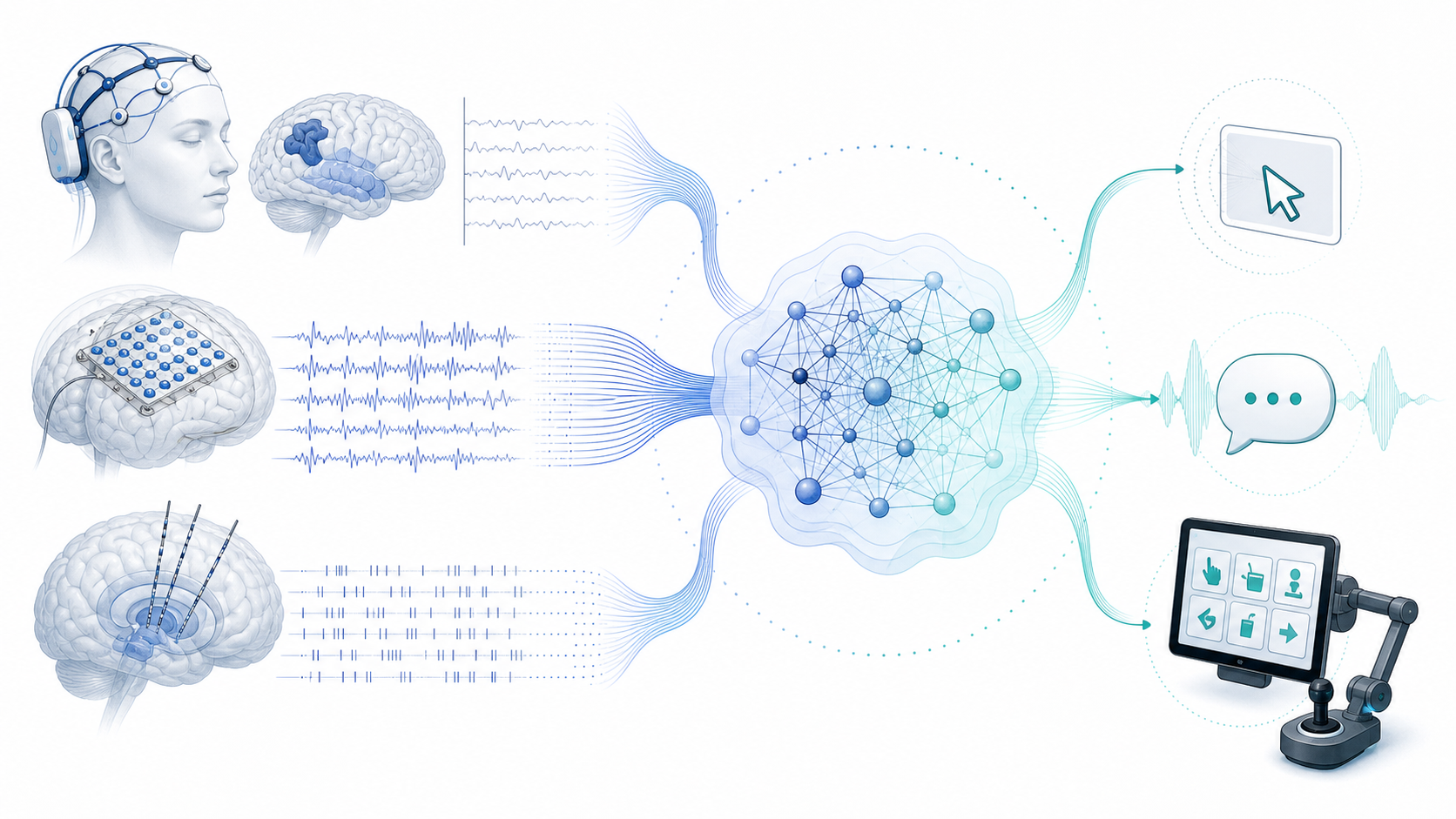
Second, I develop neural decoding and brain-computer interface methods that translate neural recordings into direct communication and control. This work spans the full invasiveness spectrum, from non-invasive wearable EEG and fNIRS in naturalistic daily life to high-resolution intracranial recordings (ECoG, iEEG) that provide the spatial and temporal precision needed for high-performance BCIs. A persistent challenge is cross-subject generalization: neural signals are high-dimensional, nonstationary, and highly individual. I address this through large-scale neural foundation models that learn transferable representations across individuals, tasks, and recording configurations.
Third, I develop closed-loop neurostimulation systems that use decoded brain states and behavioral biomarkers to deliver precisely timed, adaptive interventions. These range from non-invasive approaches such as transcranial magnetic and alternating current stimulation to implanted systems such as responsive deep brain stimulation. The systems use reinforcement learning policies to optimize stimulation parameters in real time, improving symptom targeting while reducing unnecessary stimulation compared to open-loop approaches.
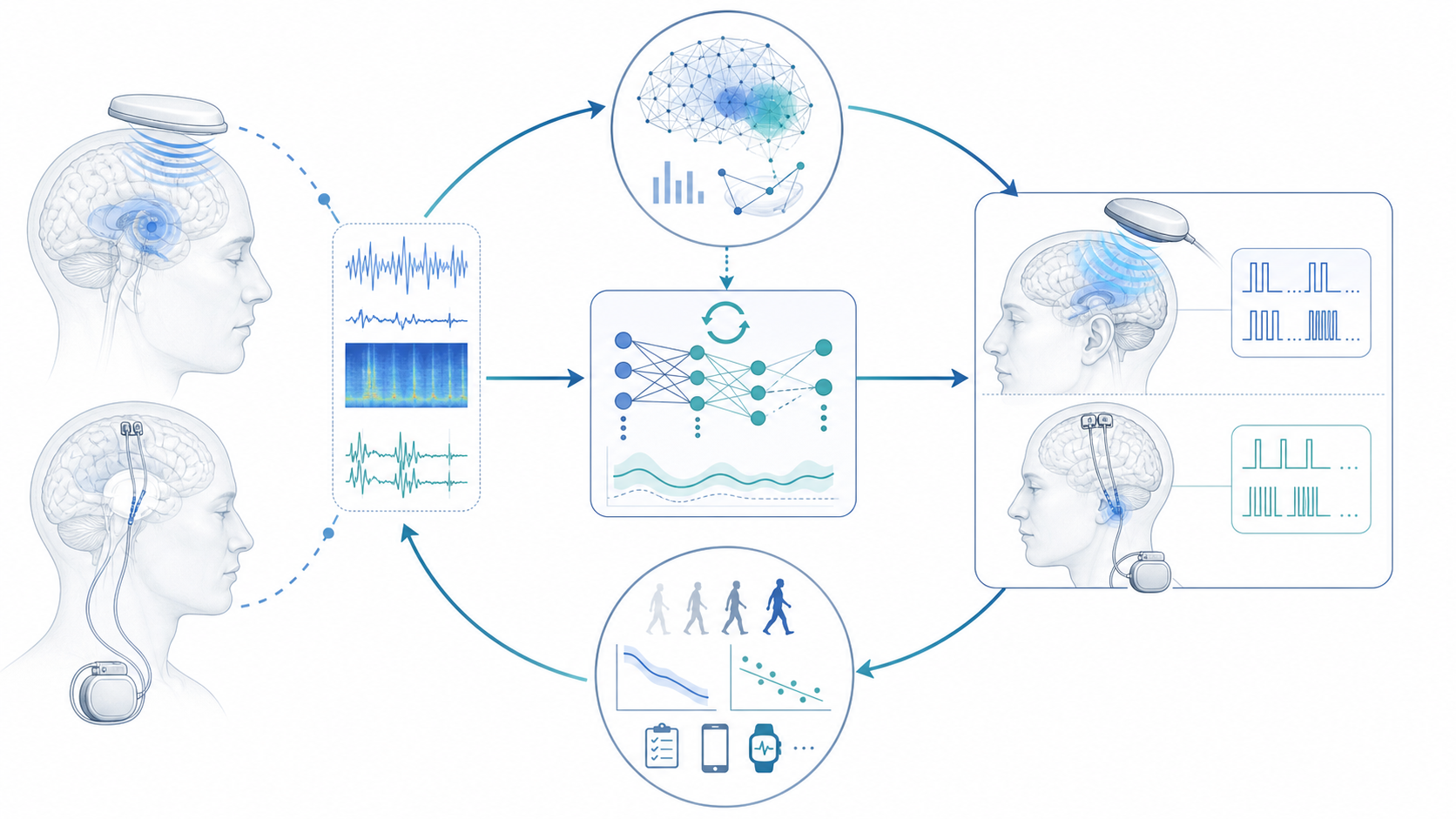
Fourth, I work toward integrating digital phenotyping and neural recording into a unified real-time brain-behavior monitoring and intervention system. The main technical challenges here are synchronizing heterogeneous data streams across behavioral, physiological, and neural modalities; designing AI agent architectures that cycle autonomously through sensing, state decoding, intervention selection, and outcome monitoring; and building patient-specific digital twins that track how neural activity relates to real-world behavior.
Note: The conceptual illustrations on this page were AI-generated with OpenAI image generation in Codex.